Bolivia Uyuni Salt Flats Without a Tour: Our 2WD Van Experience
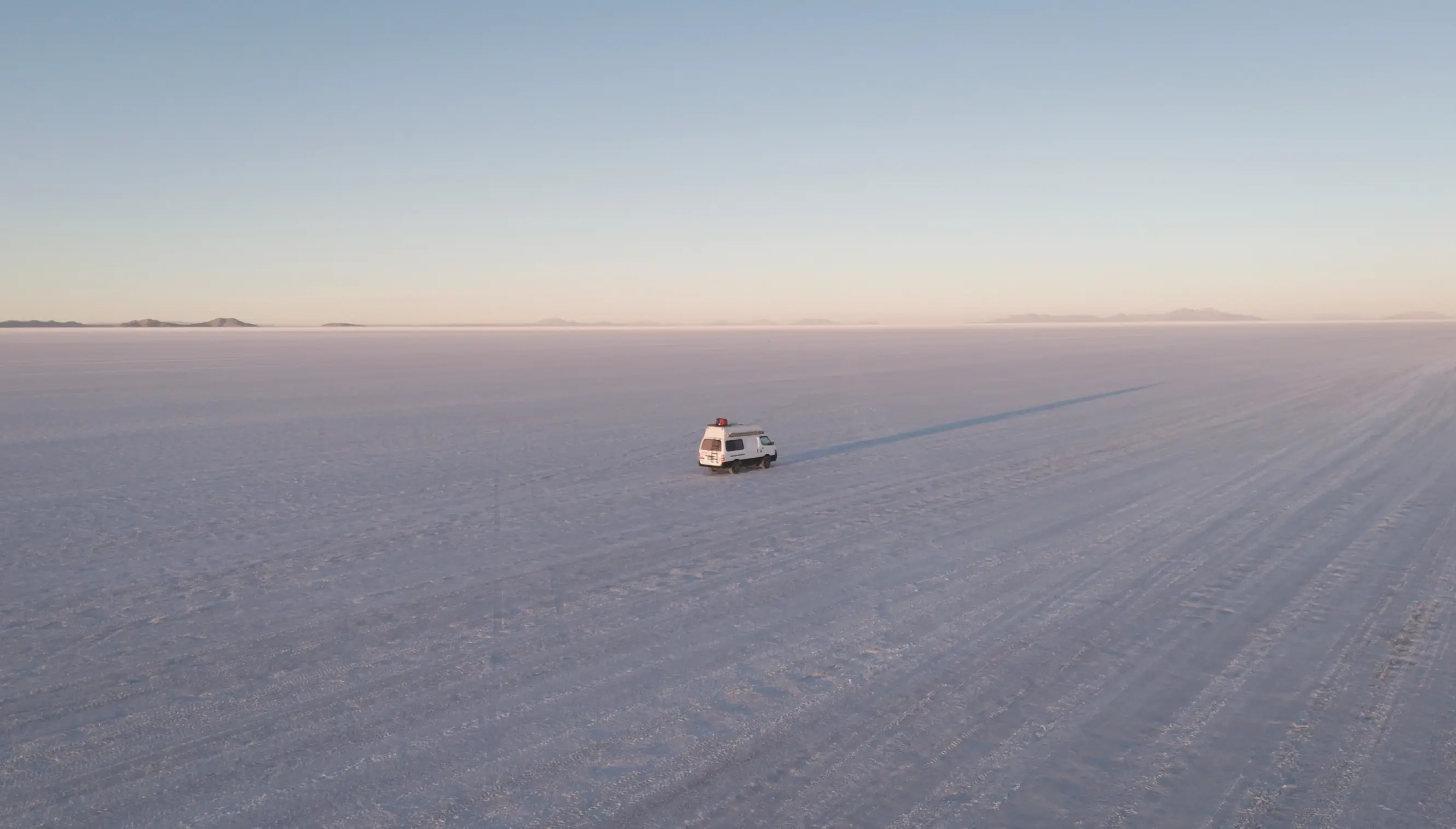
In April 2026, we visited Bolivia Uyuni salt flats without a tour. We traveled more than 20 miles with our own 2WD camper van bought several months before in Santigo de Chile.
The Salar de Uyuni (Spanish for “Uyuni salt flats”) attracts thousands of travelers every year. Most people discover this place through organized excursions. It is also possible to self-drive it and that is where the magic happens.
In this article, we share everything you need to know before you go: what type of vehicle is recommended, how to get there, how to navigate on the salt flats and some essential precautions.
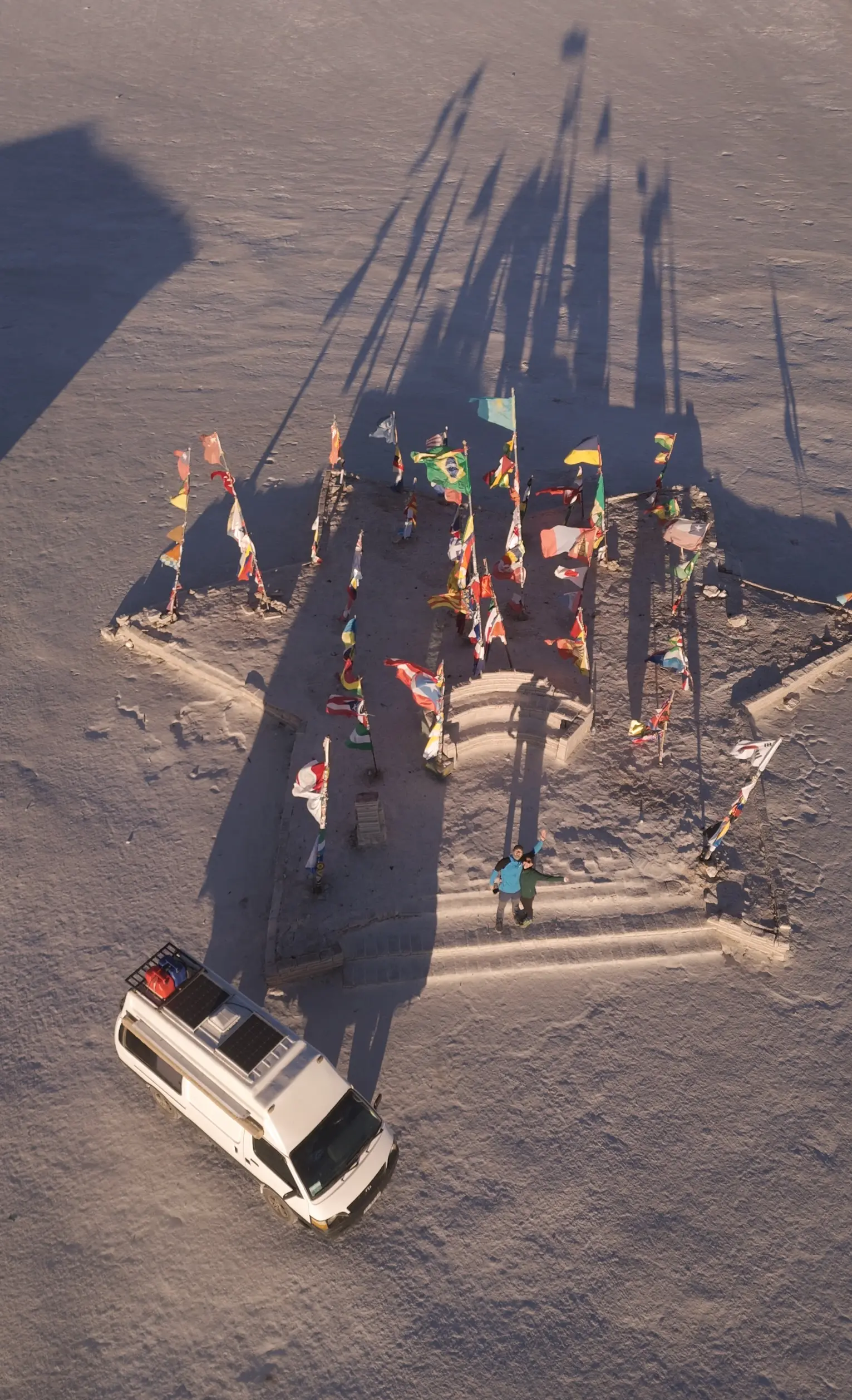
Table of contents
Key Takeaways
- You can drive on the Uyuni salt flats on your own
- A 2WD vehicle can be enough in the dry season
- Navigation is the main challenge on site
- A night on the salar is the most memorable experience
Practical Information
- How much time to spend there: 1 to 2 days
- Altitude: 3,658 m (12,000 ft)
- Weather in April: end of the rainy season, from 25 °F at night to 72 °F during the day
- Fuel: fill up in Uyuni
- Difficulty: moderate
- Cost when self-driving: about €15 (entrance + wash)
- Mobile coverage: none on the salar
Can You Visit the Bolivia Uyuni Salt Flats Without a Tour?
Yes, you can drive on the Uyuni salt flats without a tour. We did it in April 2026 in our 2WD camper van. But it takes preparation, and it isn’t for everyone.
Why Explore Uyuni Without A Tour ?
The main advantage is not depending on tour operators and having great freedom of movement. We were able to choose the places we wanted to visit, and also the timing. This let us reach the busiest spots before the tourist crowds.
We slept one night on the salar, an experience we won’t forget any time soon: sunset and sunrise, a white horizon stretching as far as the eye can see, and the feeling of landing on another planet.
What Vehicle Do You Need? 2WD vs 4x4
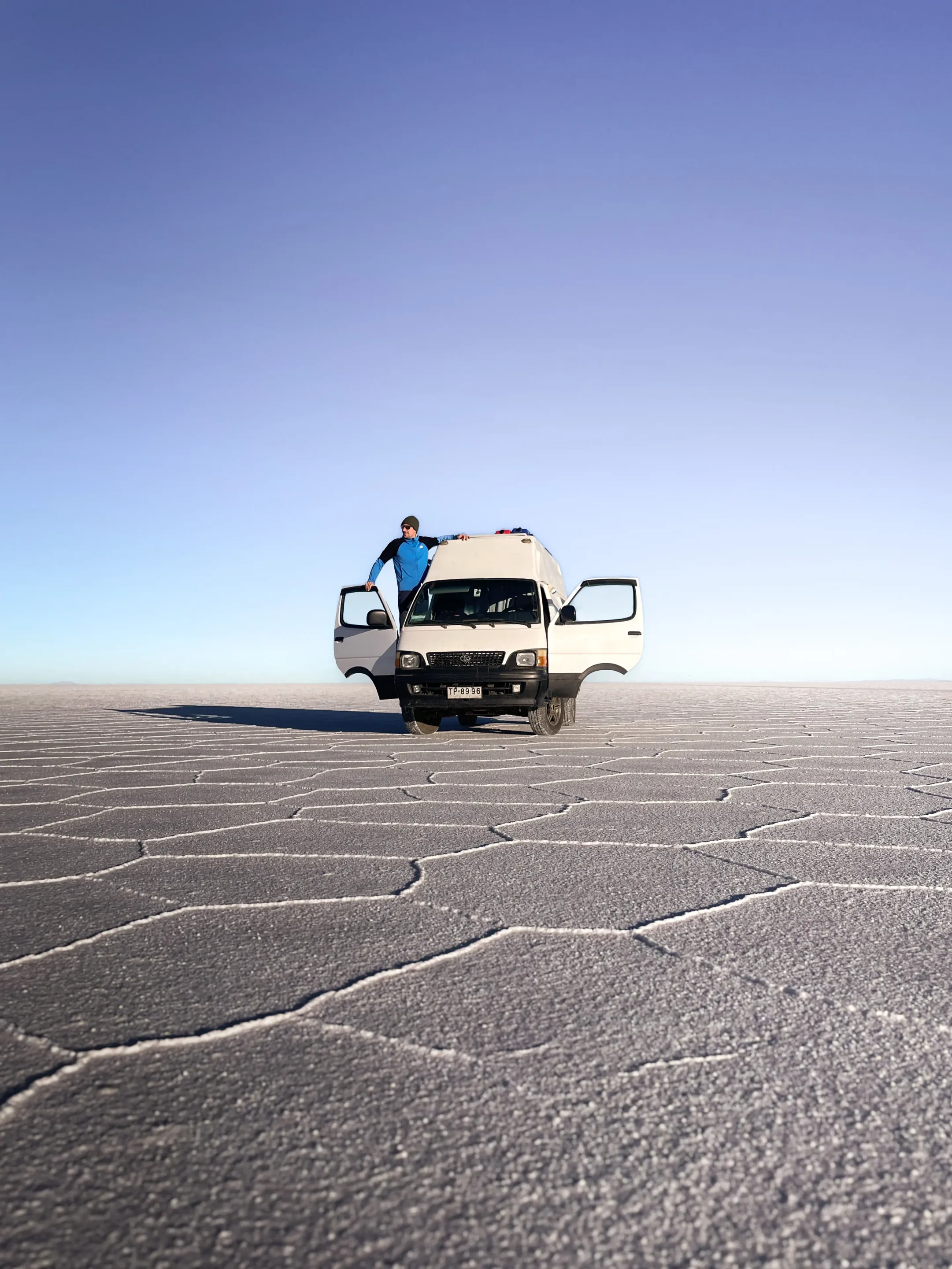
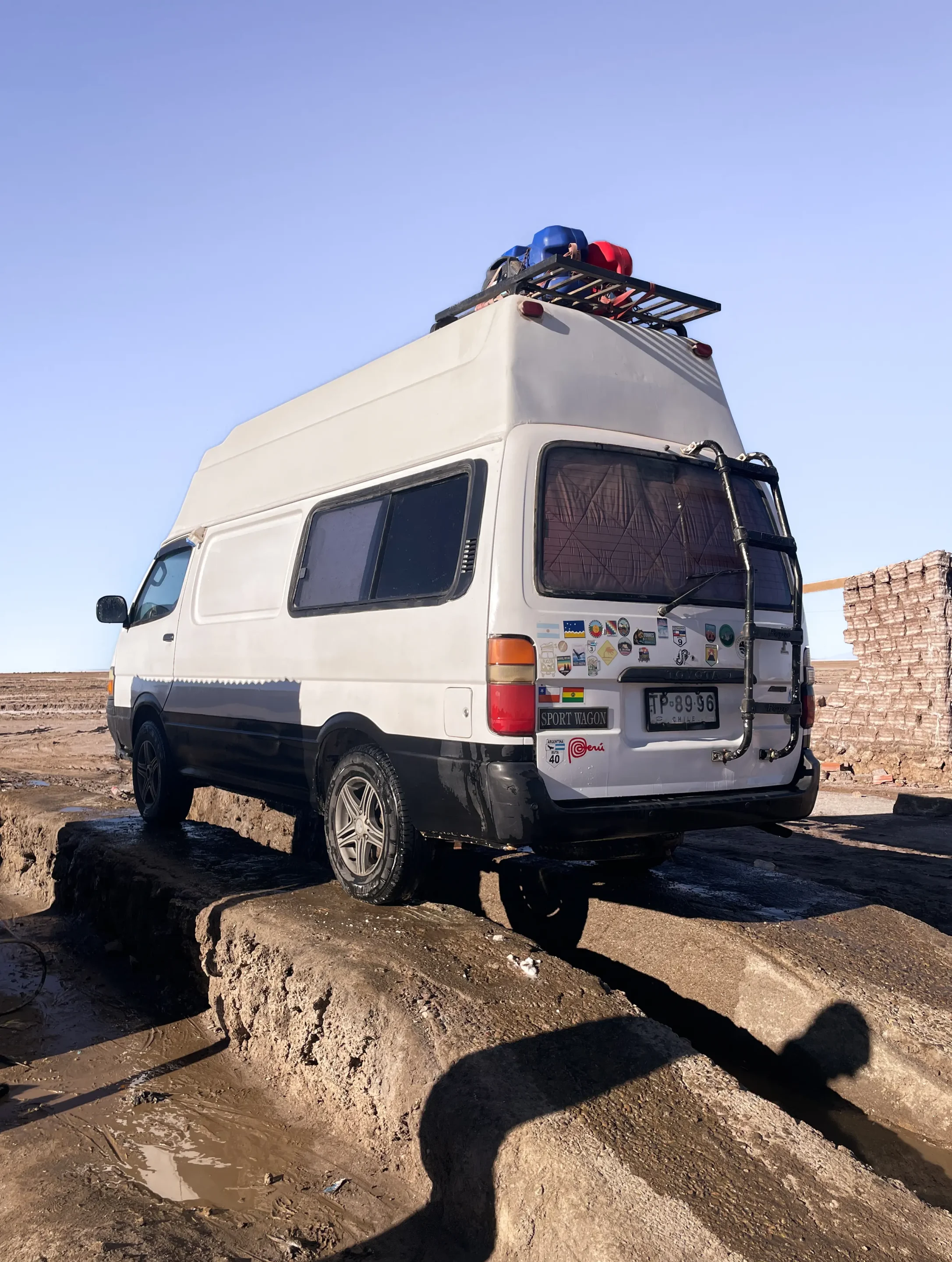
Most tour operators use 4x4 vehicles. We went there in a 2WD camper van. Our model is a Toyota Hiace with a 2.4 L gasolineengine. It is a rear-wheel-drive vehicle with relatively high ground clearance and road tires.
Everything went smoothly, apart from crossing a rut that was wetter than it looked. If you don’t have a vehicle and want to experience a night on the salt flats, book a trip from Uyuni.
If you would like to know how to buy a van in Chile to enjoy this kind of expedition, we explain everything in our article Buying a van in Chile to travel around South America: the complete guide.
Is It Safe to Self-Drive the Salt Flats?
Before driving on the salt flats without a tour, there are a three important things to keep in mind.
- Water Level and the Rainy Season
The main danger of the Salar is that it is covered in water for part of the year. This turns it into a place out of time, but it makes driving much more complicated.
The rainy season runs from December to April. We recommend checking the water level before setting off on the adventure.
- Driving On The Salt Flats
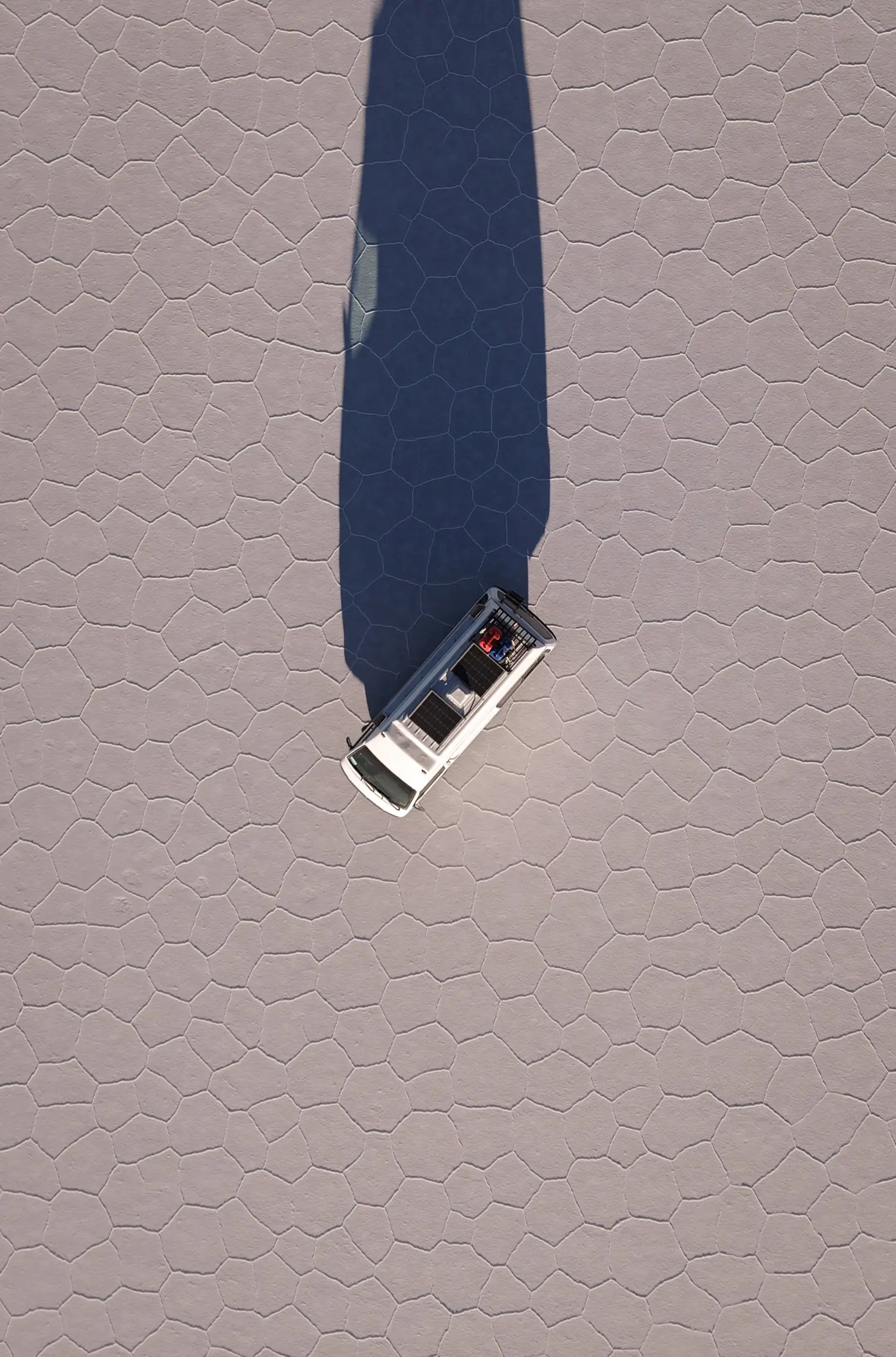
To cross the Salar de Uyuni by van, we recommend great caution. Many vehicles use these tracks, sometimes at impressive speeds. We kept our van slower because of hidden potholes
Some tracks also have sizable potholes. On top of that, distances are deceptive: the flat horizon offers few visual landmarks, which makes navigation harder.
- Salt Damage: Spraying and Washing Your Vehicle
The salt flats are made of salt, and salt is hard on vehicles. It is advisable to spray the underside of the vehicle with oil before heading out.
On the way back, a full wash is also more than necessary. Whether in Uyuni itself or in the access town of Colchani, many “lavaderos” (car washes) offer their services. We paid 80 BOB (about $12) for a full wash when leaving the salt flat (April 2026).
How to Enter the Salt Flats by Van
The Colchani Entrance and the Technical Junction
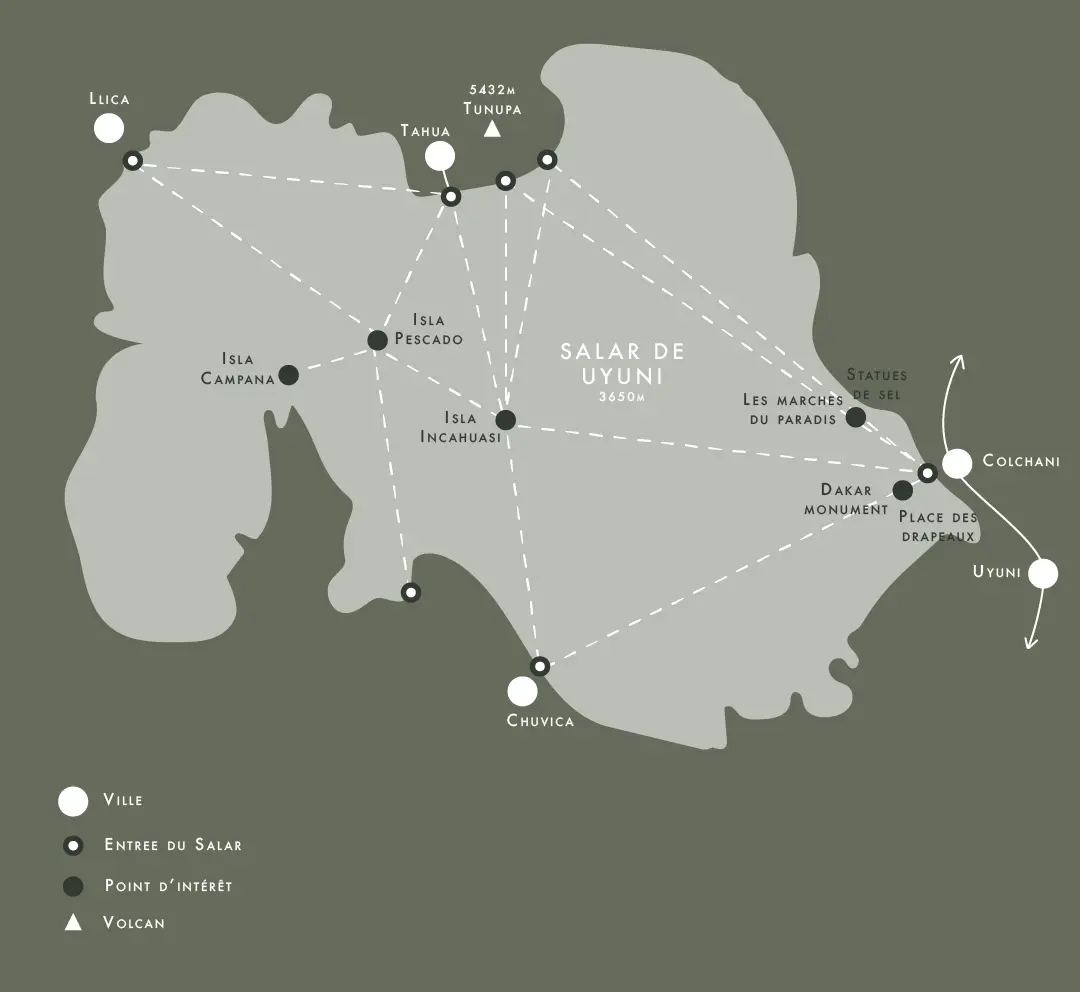
The entrance starting from the village of Colchani is the most obvious one. It is roughly half an hour’s drive from the town of Uyuni (see map). A paved road leaves Colchani and heads due west. After a toll booth, this road comes out at a junction of tracks, and this is the most technical moment. This spot has wet areas, even places completely under water, so you need to proceed with care for the first 200 to 400 meters (600 to 1,500 ft).
.
Why You Shouldn’t Arrive at Dusk
In addition, a multitude of tracks fan out in every direction, so you need to choose carefully according to your next stop. We made the mistake of arriving at the end of the day, and it was impossible for us to get past the first junction because of the lack of visibility. In general, it is best not to drive at night.
How to Navigate the Bolivia Salt Flats
Google Maps gives you a satellite view showing the different entrances and tracks. The more marked a track is, the more it is used. For real-time navigation, we used Maps.me. We therefore recommend previewing your route on Google Maps and downloading the maps in advance.
You can use a few landmarks, for example the Flag Square (Plaza de las Banderas) or the Cactus Island (Isla Incahuasi).
Our Tips Before Setting Off On Your Own
Nights can be cold in this part of Bolivia, so dress accordingly. If you are planning to be self-sufficient, Uyuni is the place to stock up on food, water and fuel. In our experience, one night is enough, but you can also plan two nights to improve your chances of catching memorable sunrises and sunsets. You can also use your stay to discover the salt hotels that line the salar.
Our Experience Driving the Salt Flats
We have a special memory of our crossing of the Salar de Uyuni by van. Perhaps because it is hard to forget a place where the horizon seems to disappear. Perhaps also because we were lucky enough to discover it at our own pace. One night, one sunrise, a few miles across the white, and that strange feeling of being somewhere else.
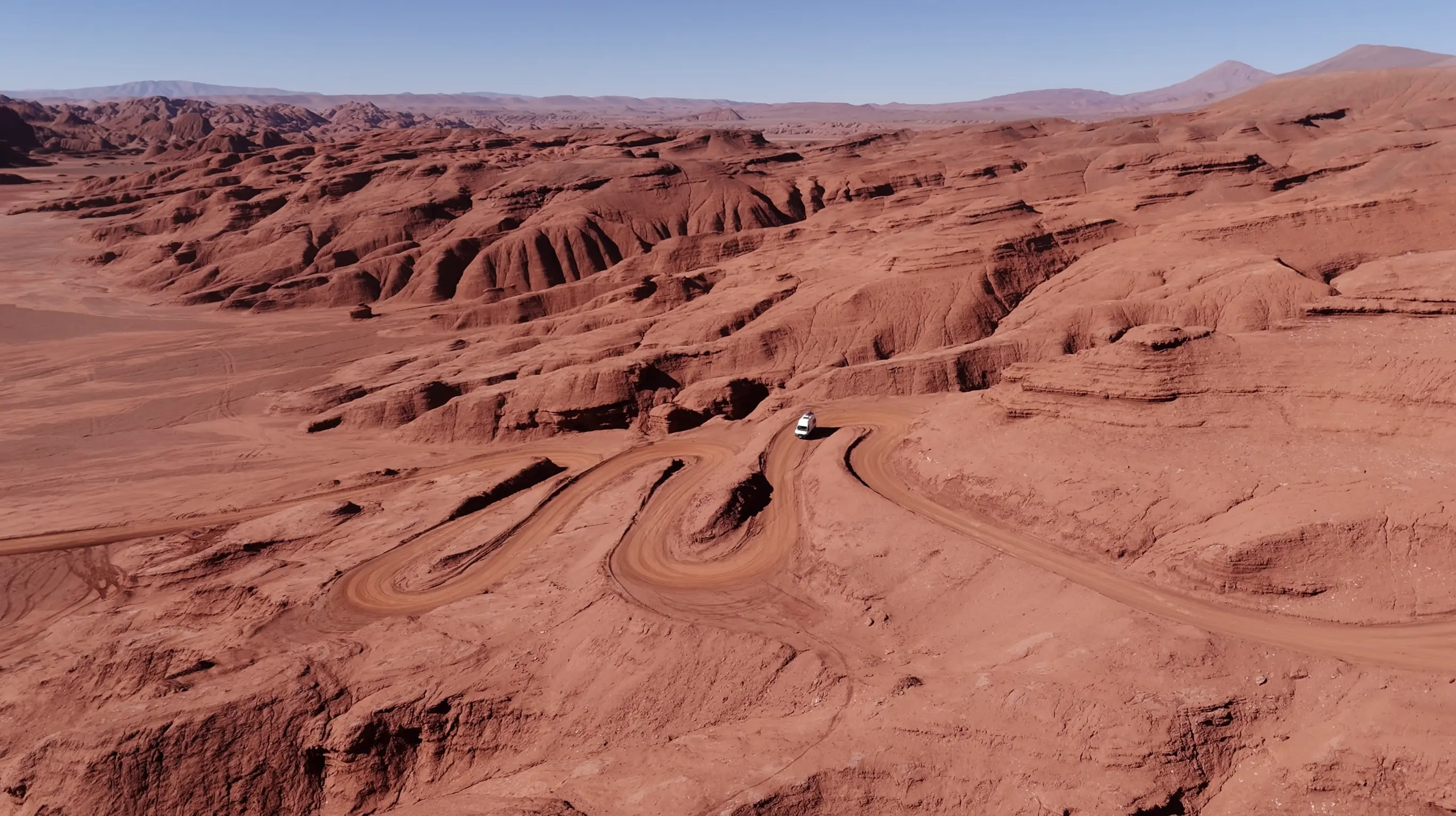
With a minimum of preparation, visiting the salar on your own is entirely doable. And it is probably one of the best ways to discover this extraordinary place. If you enjoyed this story, discover our 400-mile crossing of dirt tracks in the Argentine Puna.
FAQ
Can you do the Salar de Uyuni without a tour?
Yes, we did it on our own in April 2026.
Can you just drive on the Bolivia salt flats?
Yes but we recommend preparing the trip cautiously: plan the route, download the maps, search for water level and accessibility beforehand, spray your vehicle and drive slowly.
What tour can you take on the Salar de Uyuni?
There are several formats for visiting the Salar de Uyuni with an agency. The most common is a one-day tour. Here is a list of options: All available tours
Can you do Uyuni without a 4x4?
Yes, as long as you check the water level. Do you need a 4x4 to cross the Puna?
How much fuel range should you plan for?
At least 190 miles (300 km) from the town of Uyuni.
Can you sleep on the salt flats?
Yes, camping spots are listed on iOverlander
Does GPS work on the Salar de Uyuni?
Yes, if you use offline apps such as Maps.me
Can you go in the rainy season?
Yes, but driving conditions can become extreme.
How much does entry cost?
€2.20 per vehicle.
What is the nearest large town?
The town of Uyuni, with shops, hotels and restaurants.
What is the best time to visit the Salar de Uyuni?
All year round, although the rainy season offers extraordinary landscapes.
Is it cold in Uyuni?
Yes, nights can easily drop below zero.
What should you wear?
Trekking clothes, and boots may be advisable depending on the water level.
What should you bring?
Sunglasses, sunscreen and a camera. Consider a prop for the classic forced-perspective souvenir photo.
0 Comments